When trends in life are shaped by mass production and disposable consumption, counter culture will inevitably shape the way we view creation. With the rise of AI content taking centre stage, naturally we begin to value process over perfection, and transformation over uniformity. Despite being typically reserved for anti-mainstream signaling, ignorant styles of art like scribbles and chicken scratch are finding more success on our billboards and in our stores. What once showed genuine creation and human expression, like anything alternative, will always be co-opted as a way a business can relate to its consumers.
However, unlike ignorance, genuine creativity will always come out on top.
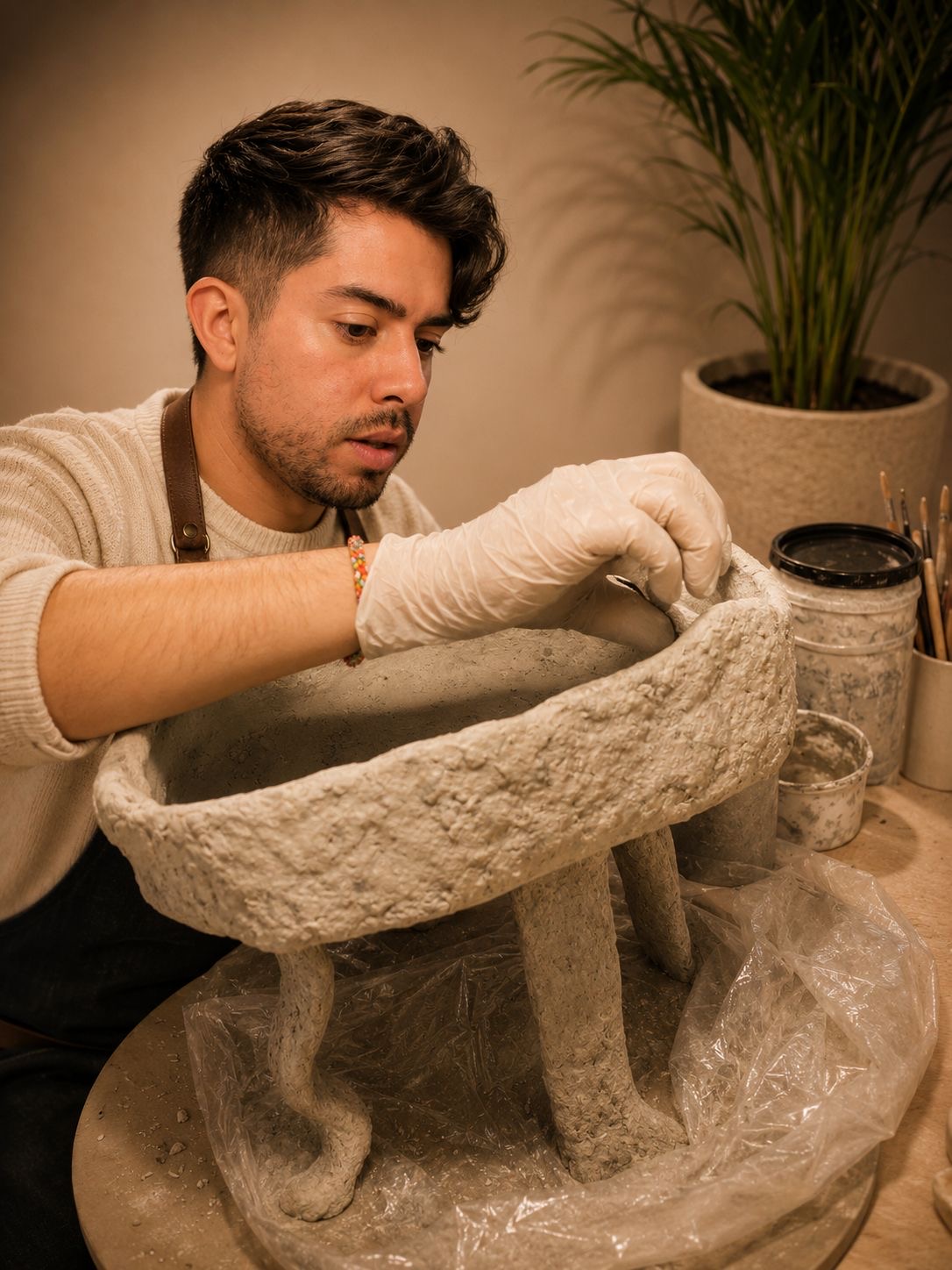
Humanity has a lot to offer creation, and the process of creation has more to offer us as we seek fulfillment outside of the businesses we pledge our time to. As an artist, I find the most important stories to tell are ones that come from waste, stories rich in texture, history, and meaning. Using materials like discarded packaging, steel and concrete, I build pieces that exist somewhere between organic and utilitarian to give new life to something otherwise forgotten. Each piece carries a tactile, imperfect beauty that challenges and reimagines conventional ideas of design and waste.
I decided to work with these materials because I found it interesting and after moving to a new house, seeing so much waste made me think it could be reused. So I started exploring more conventional techniques like paper-mâché, adding concrete to give it the characteristics and strength I was looking for. From there, anything and everything became an option for me.
When I mix coffee grounds into the paper mâché and concrete blend or embedded into the surface, the grounds introduce a rich, earthy tone and a fine, granular quality. This not only enhances the tactile experience of each piece but also reinforces my commitment to transforming everyday waste into something purposeful that tells a story. It wasn’t a grand revelation, but a willingness to listen to the small things that make up the world. The natural colours and textures that even coffee grounds incorporate quickly turned a daily habit into a new layer of creative expression.
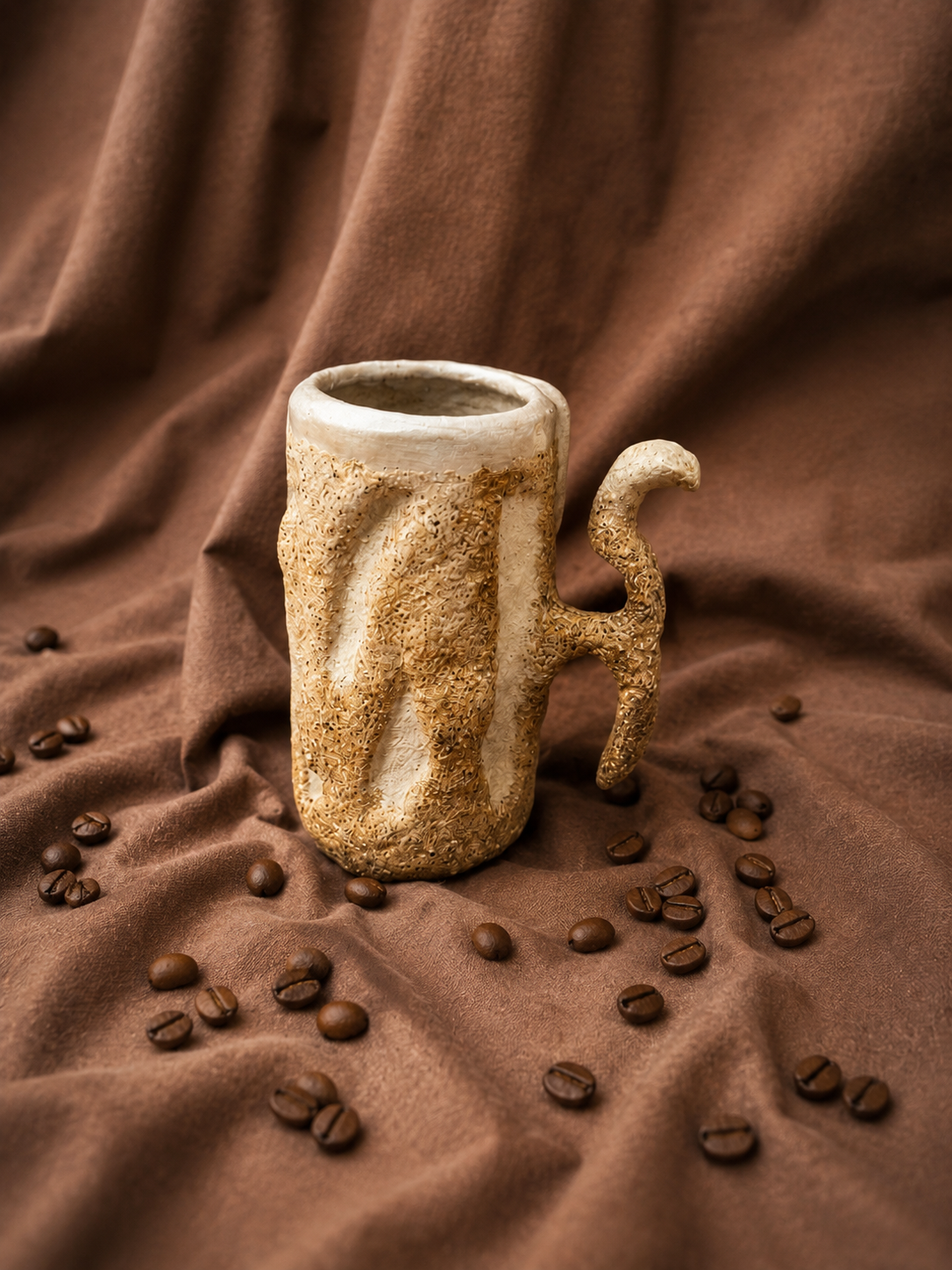
In my mind, what distinguishes my work is the identity crisis inherent to wanting purpose. These are not purely sculptural pieces, they’re designed to be used. Each object resists uniformity, no two pieces tell the same story. Instead, they embrace variation and subtle shifts in shape, texture and balance that reflect the human experience.
Cracks, holes and inconsistencies are no defects, but essential characteristics; evidence of transformation and process. These pieces reflect a deeper philosophy of beauty hidden in authenticity rather than perfection.
I was born in Curicó, Chile. About two hours south of Santiago. From a young age I felt a natural attraction to creation, primarily with my hands. I was drawn to the materials and textures that made up the hidden lives of everyday objects. I experimented like any young child, collecting broken objects to transform them into something I’d imagined. I played a lot with my creativity, but it wasn’t always understood. Worried about the bullying from classmates and teachers for my unusual hobby, my mother hid me and my work from the world. Like any stifled creative in the world today, the seeming unwillingness to accept how I thought influenced how I expressed my creativity. Later in life, my father became a constant source of support and inspiration to my work, encouraging me to seek therapy and regrow that lost flame of creativity we all keep deep inside of us.
This was a turning point for me. With guidance and support, creativity no longer felt like a burden and began to shape my view of the world without fear of judgement. It was through this journey that I found the confidence to push forward to study industrial design in university.
However, my time at university revealed more challenges. My approach was slow, deliberate and deeply personal, which clashed with the academic expectations of the classroom. My professors were frustrated because my designs weren’t ‘perfect’ in the conventional sense, nor did they conform to the polished aesthetic of mass production.
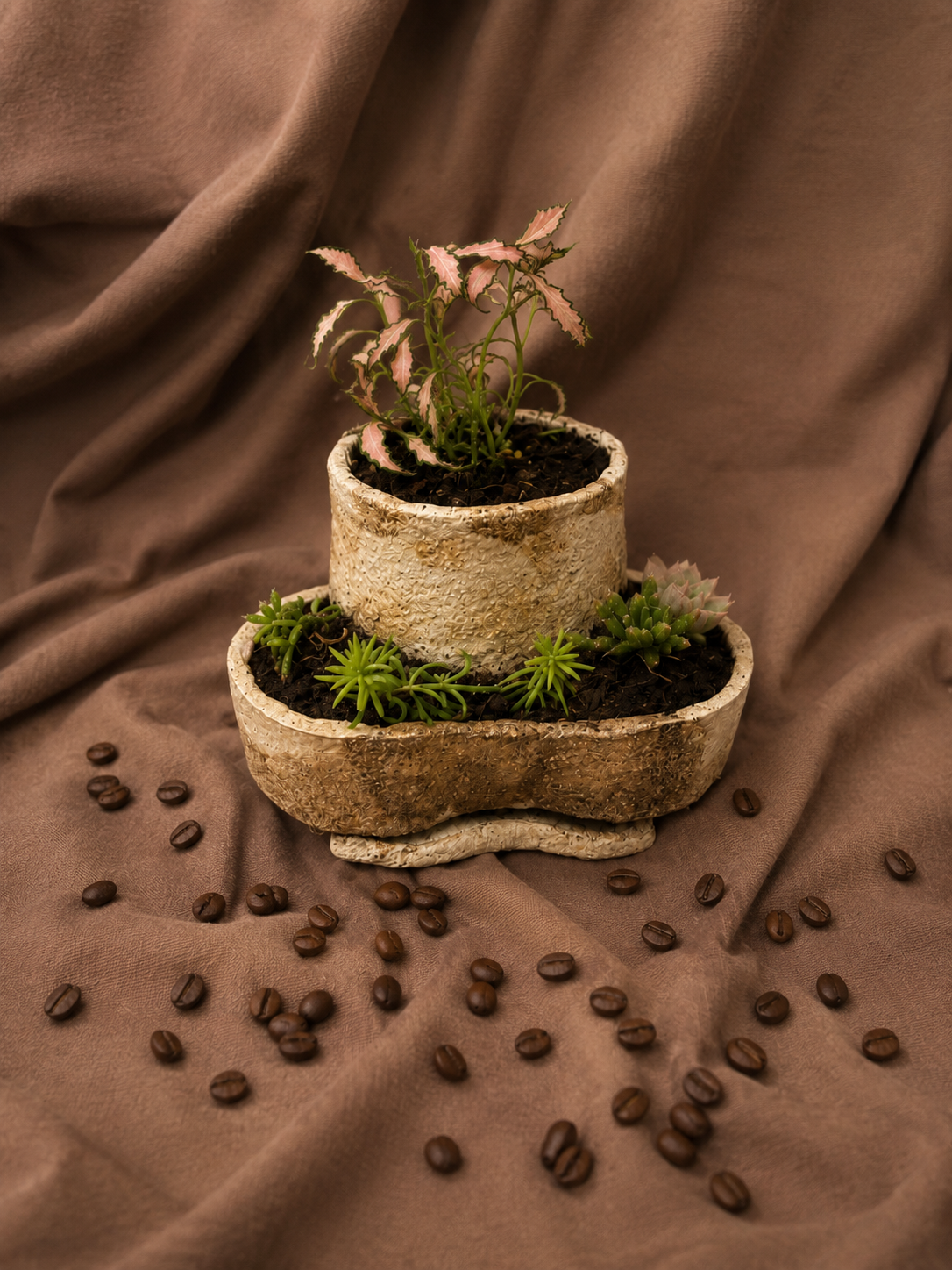
So, instead of settling, I remained authentic to myself and my vision which still make up my reasons to wake up in the morning. I rejected the idea of creating impersonal or industrially replicated objects, choosing to prioritise care, uniqueness and transparency in the process.
As an adult, I’ve come to understand my early experiences differently. My mother revealed over drinks that she’d always admired my work, and that her actions were always meant to protect my creativity, not suppress it. It’s not her fault for trying. Today I feel reconnected with what I always wanted to create without doubt. I push forward and overcome challenges to express myself in a way I would be proud of as a child.
It’s hard to imagine another world where I was never supported, and became another type of waste like the coffee grounds I used to throw away. It’s because of this that I can’t let myself be limited to only material transformation, I must also encompass narrative. Like the story that brought me here, each piece holds a complex life inside, not only of the materials it’s made of, but how they got here.
Wrapping paper becomes structure, Coffee grounds become texture, scrap wire becomes support. What was once discarded is reinvented into something its individuals can be proud of.
This approach redefines waste, creativity, and failure. Not as an end point, but as a new beginning. It fosters a shift in perspective and invites us to see the potential in something, or someone.